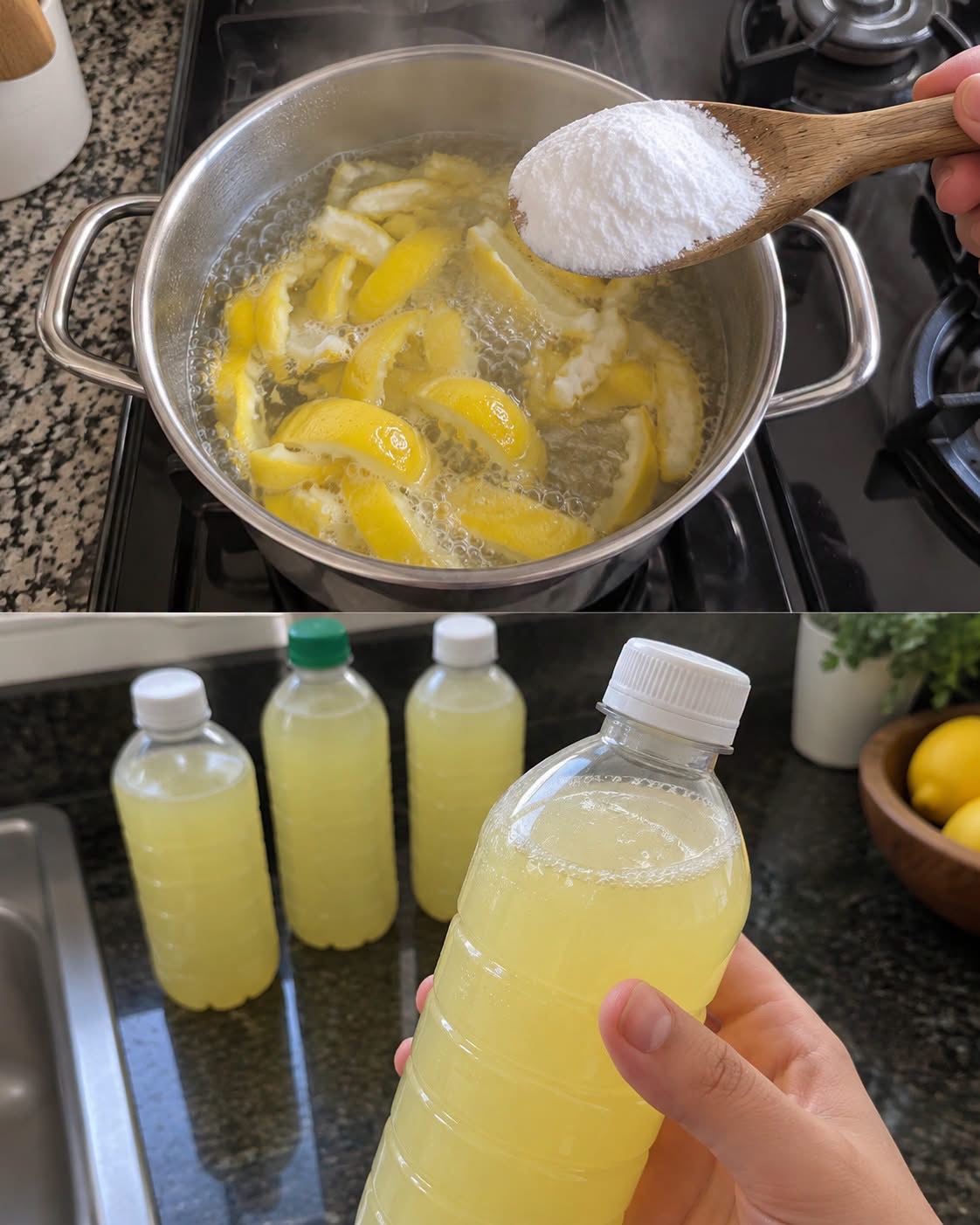
Powerful Homemade Multi-Purpose Cleaner Using Lemon Peels 🍋🫧
If you usually throw lemon peels into the trash, save them! Lemon peels can be turned into a simple homemade cleaning solution that leaves many household surfaces smelling fresh and clean.
This DIY lemon-peel cleaner is inexpensive, easy to prepare, and useful for everyday cleaning around the kitchen and home.
🍋 What You’ll Need
- Peels from 3–5 lemons
- 2 cups white vinegar
- 2 cups water
- 1 clean glass jar with a lid
- 1 spray bottle
- Fine strainer or cheesecloth
Optional
- A few drops of lemon essential oil for extra fragrance
- 1 teaspoon mild dish soap for extra cleaning power when making a small batch for immediate use
🧴 How to Make Lemon-Peel Cleaner
Step 1: Save the Lemon Peels
After using your lemons, rinse the peels briefly to remove any food residue. Cut larger pieces into smaller sections so they fit easily inside the jar.
Step 2: Fill the Jar
Place the lemon peels into a clean glass jar. Don’t pack them too tightly; leave enough room for the vinegar to surround the peels.
Step 3: Add White Vinegar
Pour white vinegar into the jar until the lemon peels are completely covered.
Close the jar tightly with the lid.
Step 4: Let It Infuse
Place the jar in a cool, dark place and allow it to sit for about 1–2 weeks.
During this time, the vinegar extracts fragrant compounds from the lemon peel, giving the mixture a pleasant citrus scent.
Step 5: Strain
After the infusion period, strain the liquid through a fine strainer or cheesecloth. Discard the used peels.
You should now have a concentrated lemon-vinegar cleaning solution.
Step 6: Dilute With Water
For an everyday spray cleaner, mix equal parts of the infused vinegar and water.
For example:
- 1 cup lemon-infused vinegar
- 1 cup water
Pour the mixture into a clean spray bottle and label it clearly.
✨ How to Use It
Kitchen Counters
Spray a small amount onto a suitable countertop surface, then wipe with a clean microfiber cloth.
Always test the solution on a small hidden area first.
Stainless-Steel Surfaces
Use a small amount on stainless steel, wiping in the direction of the grain. Finish with a dry microfiber cloth.
Sink
Spray around the sink, allow it to sit briefly, then wipe and rinse with water.
Kitchen Appliances
It can be useful for wiping the outside surfaces of many appliances. Avoid getting liquid into electrical openings.
Bathroom Surfaces
The diluted solution can be used for general wiping of suitable bathroom surfaces, especially where soap residue and everyday grime accumulate.
Glass and Mirrors
For glass, use a lightly dampened microfiber cloth rather than heavily spraying the surface. Wipe thoroughly to reduce streaks.
💡 Why Use Lemon Peels?
Lemon peels contain naturally occurring citrus compounds that contribute to their fresh fragrance and cleaning properties. Using the peels also gives them a second purpose instead of immediately throwing them away.
White vinegar contributes acidity, which makes it useful for tackling some mineral deposits and everyday household grime.
Together, lemon peels and vinegar make a convenient homemade cleaner for many routine cleaning jobs.
⚠️ Important Safety Tips
This cleaner is not suitable for every surface.
Because vinegar is acidic, avoid using it on:
- Marble
- Granite
- Limestone
- Travertine
- Other natural stone surfaces that can be damaged by acids
- Unsealed stone
- Certain delicate finishes
Do not use vinegar-based cleaners on electronics or inside electrical appliances.
Never mix vinegar with bleach or chlorine-containing products. Mixing them can produce dangerous chlorine gas.
Also, don’t assume that a homemade vinegar cleaner disinfects or sanitizes a surface. For situations where disinfection is required, use an appropriate disinfectant according to its label.
🌿 Storage
Keep the finished cleaner in a clearly labeled spray bottle and store it away from children and pets.
For best results, make a manageable batch rather than preparing more than you can reasonably use.
💰 Why This DIY Cleaner Is Budget-Friendly
One of the best things about this recipe is that the main ingredient—lemon peel—is something you might normally throw away.
Instead of buying a separate scented cleaner for every small household task, you can reuse your citrus scraps to create a simple everyday cleaning solution.
It also gives your home a fresh lemon aroma without relying on heavily fragranced commercial products.
🍋 Final Thoughts
The next time you squeeze fresh lemons for cooking or drinks, don’t automatically throw away the peels. Save them and turn them into a simple homemade lemon-vinegar cleaner.
With just lemon peels, white vinegar, water, a jar, and a spray bottle, you can create an inexpensive cleaner that’s handy for many everyday household jobs.
Just remember to test surfaces first, avoid natural stone, never mix vinegar with bleach, and rinse food-contact surfaces with clean water after cleaning.
A little kitchen waste can become a useful cleaning ingredient—and your lemons can get a second life before they reach the trash. 🍋✨