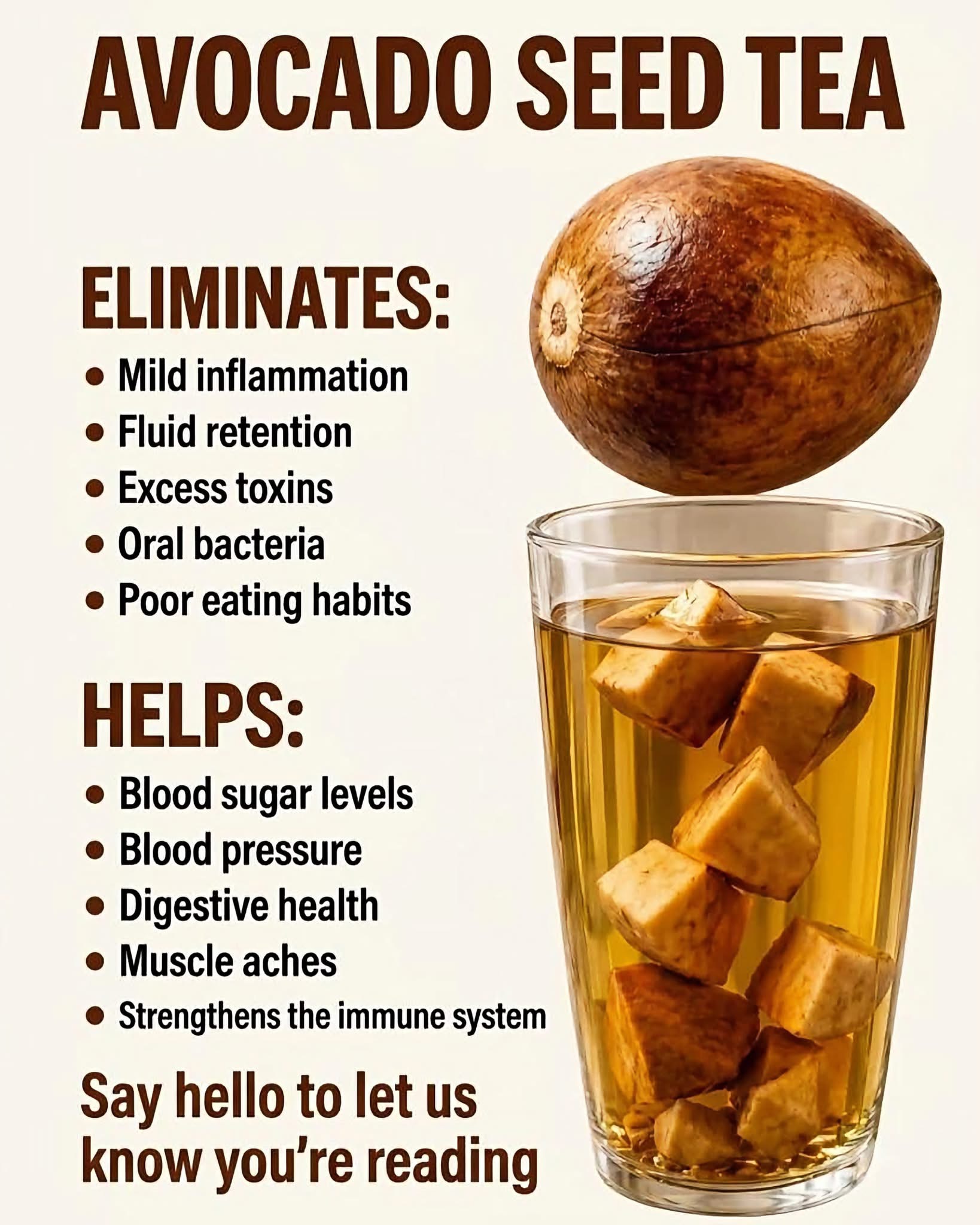
Avocado Seed Tea: What You Need to Know Before Trying It
Avocados are usually enjoyed for their creamy green flesh, while the large seed in the center is simply thrown away. In recent years, however, avocado seed tea has become a popular topic online. Social media posts often describe the seed as a natural drink that may support digestion, reduce inflammation, balance blood sugar, improve circulation, or “detox” the body.
But how much of this is actually supported by science?
The answer is more complicated than many viral posts suggest. Research has identified interesting compounds in avocado seeds, but most of the evidence comes from laboratory or animal studies rather than studies in humans. There are also unanswered questions about the safety of regularly consuming avocado seed preparations.
So, if you have seen a picture of avocado seed tea and wondered whether it is worth trying, here is a closer look.
What Is Avocado Seed Tea?
Avocado seed tea is generally made by using pieces or powder made from the hard seed inside an avocado and steeping them in hot water.
The traditional preparation seen online usually involves removing the seed, cleaning it, drying it, cutting it into smaller pieces, and placing those pieces in hot water. Some recipes add ingredients such as cinnamon, ginger, lemon, or honey to improve the flavor.
The resulting drink usually has a slightly bitter, earthy taste.
Although avocado seed preparations have been investigated for their chemical composition and potential biological activity, that does not mean that drinking the tea has been proven to provide the health benefits commonly claimed on social media.
What Is Inside an Avocado Seed?
The avocado seed contains several types of compounds, including carbohydrates, fiber, fatty acids, and various phytochemicals.
Research has found that the dry seed contains a high proportion of starch, along with other plant compounds that researchers are interested in studying. Some of these compounds have antioxidant activity in laboratory experiments.
This is one reason avocado seeds have attracted scientific interest.
However, there is an important difference between finding a potentially useful compound in a laboratory and proving that consuming the food produces a meaningful health benefit in humans.
That distinction is especially important when reading viral health claims.
Can Avocado Seed Tea Reduce Inflammation?
Inflammation is one of the most frequently mentioned benefits of avocado seed tea online.
Laboratory research has found antioxidant and other biological activity in avocado seed extracts. Some animal studies have also investigated possible anti-inflammatory effects.
However, there is currently not enough high-quality human research to say that drinking avocado seed tea treats inflammation or prevents inflammatory diseases.
Therefore, it would be misleading to describe avocado seed tea as an anti-inflammatory treatment.
A more accurate statement is that avocado seeds contain plant compounds that researchers are studying for potential biological effects.
What About Blood Sugar?
Another popular claim is that avocado seed tea can help control blood sugar.
Some animal research has produced interesting findings involving avocado seed extracts and blood glucose. But animal studies cannot automatically be translated into the same effect in humans.
The amount used, the way the extract is prepared, how the body absorbs its compounds, and the safety of the preparation can all be different.
For that reason, avocado seed tea should not be used as a substitute for diabetes medication, dietary treatment, or medical advice.
If someone has diabetes or takes medication that affects blood sugar, experimenting with concentrated herbal preparations without discussing them with a healthcare professional is particularly unwise.
Could It Help With Digestion?
Avocado seed tea is also sometimes promoted as a digestive drink.
There is scientific interest in compounds found in avocado seeds, but there is insufficient human evidence to establish that avocado seed tea improves digestion, relieves constipation, or treats digestive disorders.
A warm drink itself can feel soothing after a meal, but that does not necessarily mean the avocado seed is responsible for a medical effect.
For everyday digestive health, foods with established benefits—such as fruits, vegetables, whole grains, legumes, and adequate fluids—have much stronger nutritional evidence behind them.
Does It “Detox” the Body?
The word detox is one of the most common claims associated with avocado seed tea.
It is important to be careful with this claim.
Your body already has organs, particularly the liver and kidneys, that continuously process and eliminate many unwanted substances. There is no good evidence that avocado seed tea “flushes toxins” from the body in the way viral posts often imply.
Drinking enough water, eating a varied diet, getting adequate sleep, and limiting excessive alcohol and highly processed foods are much more meaningful ways to support normal health.
So rather than saying avocado seed tea “eliminates toxins,” it is more accurate to say that there is no established evidence showing that it performs a detoxification treatment in humans.
Is Avocado Seed Tea Safe?
This is probably the most important part of the discussion.
The safety of avocado seed consumption has not been adequately established in humans. Research on avocado seeds has largely involved laboratory experiments and animals, and researchers have raised concerns about certain naturally occurring compounds.
Some animal studies have found that high doses of avocado seed extracts can cause harmful effects.
That does not mean that a single cup of avocado seed tea will necessarily cause harm. It does mean that we do not have enough evidence to confidently recommend regular consumption or claim that it is completely safe.
This is why viral recipes should be approached carefully.
Why the Preparation Matters
Another issue is that “avocado seed tea” does not refer to one standardized product.
One person might use a small piece of fresh seed. Another might dry and grind the entire seed. Someone else might make a concentrated extract.
These preparations can potentially contain very different amounts of plant compounds.
Scientific studies may also use extracts prepared under controlled laboratory conditions that are very different from a homemade tea.
Consequently, you cannot assume that the results of an animal study using a particular avocado seed extract apply directly to a homemade cup of tea.
A Simple Avocado Seed Tea Recipe Seen Online
If you’re researching this drink because you’ve seen the viral recipe, a commonly described preparation looks like this:
Ingredients
- 1 avocado seed
- 2–3 cups of water
- Optional lemon or ginger for flavor
Preparation
Wash the avocado thoroughly before removing the seed.
The seed can then be cleaned and dried before being cut into smaller pieces. Because the seed is extremely hard, cutting it requires care.
Place the pieces in water and bring the water to a gentle simmer. After steeping, strain the liquid before drinking.
Some online recipes recommend adding lemon, ginger, cinnamon, or a small amount of honey.
However, this recipe should not be interpreted as a medically proven or established safe treatment. There is insufficient human evidence to determine an appropriate dose or frequency for avocado seed tea.
Who Should Be Especially Careful?
People who are pregnant or breastfeeding, children, older adults with multiple medical conditions, and people taking prescription medications should be particularly cautious about consuming unproven herbal preparations.
Anyone with a chronic medical condition should also avoid replacing prescribed treatment with an avocado seed drink.
If you experience symptoms such as vomiting, severe abdominal discomfort, dizziness, difficulty breathing, swelling, or another concerning reaction after consuming an unfamiliar preparation, stop using it and seek appropriate medical attention.
Avocado Seed vs. Avocado Flesh
There is an important distinction between the avocado fruit and its seed.
The edible flesh of avocado is a well-established food containing fiber, fats, vitamins, minerals, and other nutrients. Research continues to investigate its potential role in a healthy diet.
The seed is different.
It is not a standard part of most people’s diet, and its safety and nutritional benefits for humans have not been established to the same degree.
Therefore, you shouldn’t assume that because avocado flesh is nutritious, the seed must automatically be beneficial as well.
What Does the Research Actually Say?
The most balanced conclusion is this:
Avocado seeds are scientifically interesting, but their health benefits in humans remain unproven.
Laboratory and animal research has investigated antioxidant, antimicrobial, blood-sugar-related, cholesterol-related, and other possible effects. Some findings are promising enough to justify additional research.
But promising preliminary research is not the same as clinical evidence.
Before avocado seed tea can reasonably be recommended as a health drink, researchers would need well-designed human studies examining its effectiveness, appropriate dose, possible interactions, and long-term safety.
Until then, claims such as “avocado seed tea eliminates toxins,” “cures inflammation,” or “controls blood sugar” go beyond the available evidence.
Final Thoughts
Avocado seed tea is an interesting example of how traditional practices, scientific research, and social-media trends can become mixed together.
The seed contains a variety of plant compounds that researchers are studying, and laboratory and animal research has produced some interesting findings. But there is currently a lack of strong human evidence proving that avocado seed tea provides the impressive health benefits frequently claimed online.
Most importantly, safety has not been adequately established for regular human consumption.
So if you’re creating a health or recipe post about avocado seed tea, it’s better to avoid presenting it as a cure, detox drink, or treatment. A more responsible approach is to describe it as a popular homemade preparation that is still under-researched.
That makes the article more informative, more trustworthy, and less likely to turn an interesting food trend into a misleading health claim.