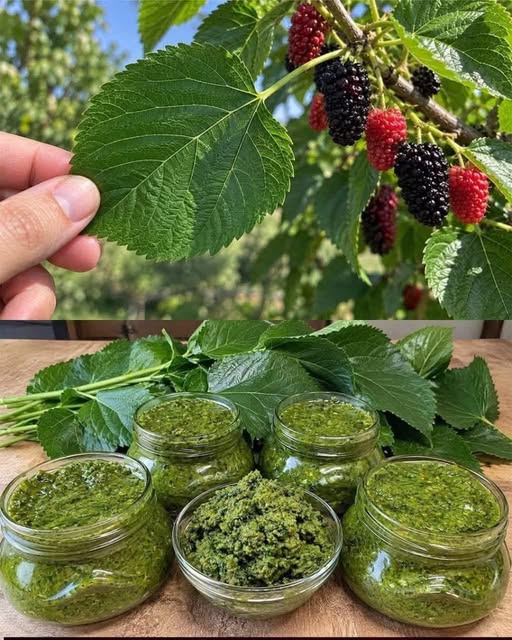
While most people focus strictly on the delicious fruit, tender young mulberry leaves are an incredible, nutrient-dense green packed with antioxidants, minerals, and compounds known for regulating blood sugar.
As shown in your image, fresh mulberry leaves can be transformed into a vibrant, savory Mulberry Leaf Pesto a fantastic way to harness their green power.
Wild Mulberry Leaf Pesto Recipe
Ingredients:
- 2 large handfuls of tender, young mulberry leaves (pick fresh, light-green leaves from near the tips of the branches, washing them thoroughly)
- 1/2 cup nuts or seeds (traditionally pine nuts or walnuts, but almonds or sunflower seeds work wonderfully)
- 2 to 3 cloves of garlic (peeled)
- 1/2 cup grated Parmesan or Pecorino cheese (optional; can be omitted or swapped for nutritional yeast for a vegan version)
- 1/2 cup extra-virgin olive oil (adjust for desired thickness)
- A squeeze of fresh lemon juice (to brighten the flavor and preserve the bright green color)
- Salt and freshly cracked black pepper to taste
Instructions:
- Prep the Leaves: Harvest clean, young mulberry leaves. Strip them away from any tough stems, wash them thoroughly, and pat them completely dry with a clean kitchen towel.
- Toast the Nuts: If using raw nuts or seeds, toast them lightly in a dry skillet over medium heat for 3–5 minutes until fragrant and lightly golden, then let them cool.
- Blend the Base: Place the mulberry leaves, garlic cloves, and toasted nuts into a food processor or blender. Pulse several times to coarsely chop everything together.
- Emulsify with Oil: With the food processor running on low, slowly drizzle in the extra-virgin olive oil. Stop to scrape down the sides as needed until the mixture forms a cohesive, textured paste.
- Add Cheese and Seasoning: Stir in the grated cheese (if using), a splash of lemon juice, salt, and black pepper. Pulse just until combined. Taste and adjust seasoning if necessary.
- Jar and Store: Transfer the pesto into clean glass jars. Pour a thin layer of olive oil right over the top surface of the pesto to seal it from the air, which keeps it fresh and bright green.
How to Use It:
- Pasta Sauce: Toss a few spoonfuls straight into hot freshly cooked pasta (like spaghetti or penne).
- Spread & Dips: Slather it onto crusty artisan bread, crackers, or use it as a sandwich spread.
- Marinade: Rub it over chicken, fish, or roasted vegetables before or after cooking for a deeply herbaceous flavor.