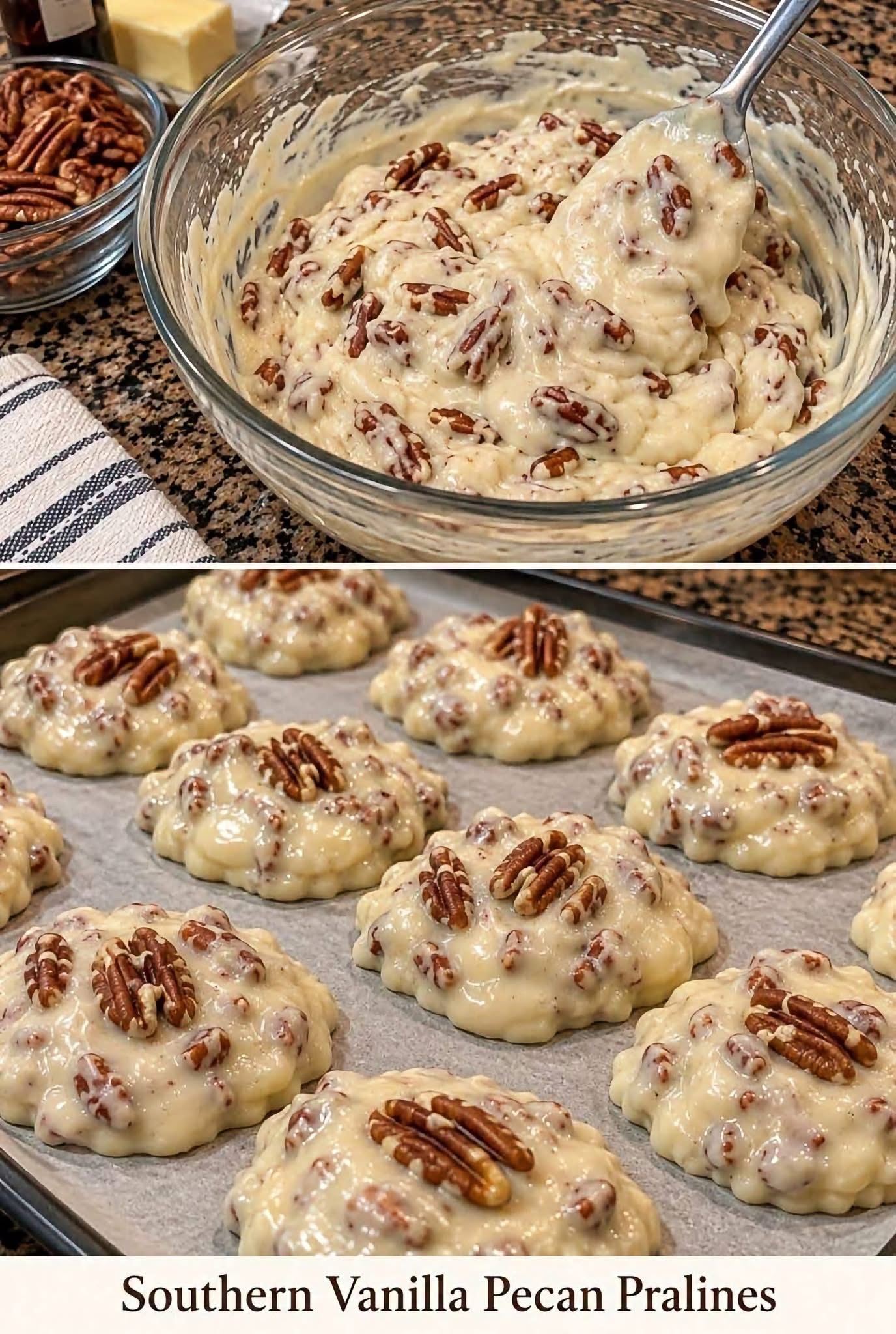
Southern Vanilla Pecan Pralines
Southern Vanilla Pecan Pralines are a classic Southern-inspired sweet made with crunchy pecans, rich butter, creamy sugar, and a delicate vanilla flavor. These homemade treats have a soft, creamy texture when freshly prepared and develop a delicious, melt-in-your-mouth consistency as they cool. Every bite combines the nutty taste of pecans with a sweet vanilla mixture that makes these pralines especially comforting during the holiday season.
Although they look like fancy homemade candies, pecan pralines can be made with simple pantry ingredients and a little patience. They are perfect for Christmas cookie trays, holiday parties, family gatherings, homemade food gifts, or an afternoon treat with coffee or tea.
If you enjoy traditional Southern sweets, this vanilla pecan praline recipe is a wonderful addition to your collection. The mixture comes together in one saucepan, and the finished pralines can be arranged on parchment paper to cool into individual portions.
Why You’ll Love These Southern Vanilla Pecan Pralines
- Simple ingredients: You only need a handful of common baking and candy-making ingredients.
- Rich vanilla flavor: Vanilla extract adds a warm, fragrant flavor that complements the toasted pecans.
- Crunchy pecans: Chopped pecans provide texture and balance the sweetness of the creamy candy.
- Perfect for the holidays: These treats look beautiful on Christmas dessert platters and homemade gift boxes.
- Easy to share: Make small pralines for parties, cookie exchanges, bake sales, and family celebrations.
- Make-ahead friendly: Once completely cooled and set, the pralines can be stored in an airtight container.
Ingredients for Southern Vanilla Pecan Pralines
Prep time: 15 minutes
Cook time: 15–25 minutes
Cooling time: 30–60 minutes
Total time: Approximately 1 hour to 1 hour 40 minutes
Yield: About 18–24 pralines, depending on size
Ingredients
- 2 cups granulated sugar
- 1 cup packed light brown sugar
- 1/2 cup unsalted butter
- 1/2 cup heavy cream
- 1/2 cup whole milk
- 2 tablespoons light corn syrup
- 2 cups pecan halves or roughly chopped pecans
- 2 teaspoons pure vanilla extract
- 1/4 teaspoon salt
Recipe note: These quantities are a practical starting point for a traditional creamy pecan praline. The photograph does not establish the exact original recipe, and praline texture depends on cooking temperature, humidity, and the amount of stirring.
Step-by-Step Instructions
Step 1: Prepare the Baking Sheets
Line two large baking sheets with parchment paper or silicone baking mats. Make sure the sheets are placed on a flat, heat-resistant surface where they can remain undisturbed while the pralines cool.
Measure the pecans, vanilla extract, and remaining ingredients before beginning. Candy mixtures can change texture quickly once they reach the correct temperature, so having everything ready makes the process easier.
If you prefer a deeper nutty flavor, lightly toast the pecans in a dry skillet over medium-low heat for 3–5 minutes, stirring frequently. Let them cool before using them.
Step 2: Combine the Sugars and Dairy
Place the granulated sugar, brown sugar, butter, heavy cream, milk, corn syrup, and salt in a heavy-bottomed saucepan.
Set the saucepan over medium heat and stir gently until the butter melts and the sugars begin dissolving. Scrape the sides of the pan carefully to help prevent undissolved sugar crystals from remaining above the mixture.
Continue heating until the mixture reaches a gentle boil. Avoid turning the heat too high because the sugar mixture can scorch on the bottom of the pan.
Step 3: Cook the Mixture to the Correct Temperature
Once the mixture begins boiling, attach a candy thermometer to the saucepan if available.
Continue cooking until the mixture reaches approximately 236–240°F (113–116°C), the soft-ball stage used for many creamy praline recipes. Depending on the recipe and local conditions, the ideal endpoint may vary slightly.
Stir gently as needed to prevent scorching, but avoid excessive stirring during the boiling stage.
If you do not have a candy thermometer, you can test a small amount of the mixture in cold water. It should form a soft, pliable ball when gathered between your fingers after cooling. Use caution when handling hot sugar because it can cause serious burns.
Step 4: Let the Mixture Cool Briefly
Remove the saucepan from the heat and allow the mixture to cool for approximately 2–3 minutes.
Add the vanilla extract and stir carefully. The mixture will be extremely hot, so keep your face and hands away from rising steam.
Letting the mixture cool briefly before the final beating helps encourage the creamy texture associated with traditional pralines.
Step 5: Beat Until Slightly Thickened
Using a sturdy wooden spoon, beat the mixture until it begins to thicken and loses some of its glossy appearance. This can take several minutes.
The mixture should remain soft enough to spoon onto the prepared baking sheets but thick enough to hold its shape.
Be careful not to beat it for too long. If it becomes too thick in the saucepan, the pralines may be difficult to portion and may not develop a smooth texture.
Step 6: Fold in the Pecans
Add the pecans to the thickened mixture and stir until they are evenly coated.
Make sure the nuts are distributed throughout the mixture so that every praline contains plenty of pecan pieces. If you prefer a more pronounced crunch, reserve a few pecan halves to place on top of each portion.
Step 7: Spoon the Pralines onto the Baking Sheets
Working quickly, drop spoonfuls of the mixture onto the prepared parchment paper. Leave approximately 2 inches between each portion because the mixture may spread slightly before setting.
For a decorative finish, gently press one or two pecan halves onto the top of each praline while the mixture is still soft.
Try to make the portions similar in size so they cool and set at roughly the same rate.
Step 8: Allow the Pralines to Cool
Leave the pralines at room temperature for 30–60 minutes, or until they are firm enough to lift from the parchment paper.
The centers should be creamy and tender rather than hard like brittle. The exact texture will depend on the final cooking temperature and how much the mixture was beaten.
Once completely cooled, carefully remove the pralines from the parchment and transfer them to a serving plate or airtight storage container.
Helpful Tips for Perfect Vanilla Pecan Pralines
Use Fresh Pecans
Fresh pecans provide the best flavor and texture. Nuts that have been stored for too long can develop an unpleasant, stale taste. Keep pecans refrigerated or frozen if you need to store them for an extended period.
Choose a Heavy-Bottomed Saucepan
A heavy saucepan distributes heat more evenly and reduces the risk of scorching. Thin pans can develop hot spots that cause the sugar mixture to burn before it reaches the correct temperature.
Watch the Temperature Carefully
Temperature is one of the most important factors in candy making. A mixture that is undercooked may remain too soft, while an overcooked mixture can become dry, crumbly, or difficult to spoon.
For the most consistent results, use a reliable candy thermometer.
Avoid Making Candy on Very Humid Days
Humidity can affect how sugar-based candies set. If possible, prepare pralines on a relatively dry day and allow them to cool in a room with comfortable, stable conditions.
Work Quickly After Beating
Once the mixture begins to thicken, it can set rapidly. Prepare your baking sheets before cooking and have your spoon ready so you can portion the pralines without delay.
Common Problems and How to Fix Them
Why are my pralines too soft?
The mixture may not have reached the correct cooking temperature, or the pralines may need more time to cool. Allow them to set fully before judging the final texture.
Why did my pralines become grainy?
Sugar crystallization can occur if sugar crystals remain on the sides of the pan or if the mixture is handled incorrectly during cooking. Stir gently while dissolving the sugar, avoid scraping crystallized sugar from the pan sides into the mixture, and follow the cooling and beating steps carefully.
Why did my pralines become too hard?
The mixture may have been cooked beyond the soft-ball stage. Use a thermometer and remove the pan from the heat as soon as the target temperature is reached.
Why did my pralines spread too much?
The mixture may have been too warm or too thin when spooned onto the parchment. Allow it to cool briefly and thicken before portioning, but do not wait until it becomes too stiff to handle.
What if the mixture hardens in the pan?
Pralines can set quickly after beating. If the mixture becomes too firm to portion, gently warm it over very low heat for a short time, stirring carefully. Avoid overheating, which can change the texture.
Variations to Try
Toasted Pecan Pralines
Toast the pecans lightly before adding them to the mixture. This brings out their natural nutty aroma and adds extra depth to the finished candy.
Vanilla Cinnamon Pralines
Add a small pinch of ground cinnamon with the salt for a subtle warming flavor. This variation works particularly well for autumn and Christmas dessert trays.
Sea Salt Pecan Pralines
Sprinkle a few tiny flakes of sea salt over the pralines immediately after portioning. The mild saltiness contrasts nicely with the sweetness of the candy.
Extra-Vanilla Pralines
Use a good-quality pure vanilla extract for a more noticeable vanilla aroma. Add it after removing the saucepan from the heat to preserve its fragrance.
Chocolate-Dipped Pecan Pralines
Once the pralines have completely cooled and set, dip part of each piece into melted semisweet chocolate. Place them on parchment paper until the chocolate firms up.
How to Store Southern Vanilla Pecan Pralines
Allow the pralines to cool completely before storing them. Place them in an airtight container, separating layers with parchment paper to prevent sticking.
Keep them in a cool, dry place away from direct sunlight and heat. Because this recipe contains dairy, refrigerate the pralines if they will not be eaten promptly, following appropriate food-safety guidance for homemade dairy-containing sweets.
For longer storage, freeze the pralines in a freezer-safe, airtight container with parchment between the layers. Thaw them in their closed container to help minimize condensation.
If you are preparing these sweets for Christmas gifts, make them as close to the gifting date as practical and package them only after they are fully cooled and set.
Frequently Asked Questions
Are pecan pralines cookies or candy?
Traditional Southern pecan pralines are generally considered a type of candy rather than a baked cookie. They are made by cooking sugar and dairy, adding pecans, and allowing the mixture to cool and set. Although they may be described as cookies in social media posts, they do not usually contain flour or require baking.
Can I make pralines without a candy thermometer?
Yes. A cold-water soft-ball test can help you estimate when the mixture has reached the correct stage. However, a thermometer generally provides more consistent results, particularly for beginners.
Can I use chopped pecans instead of pecan halves?
Absolutely. Chopped pecans work well and distribute easily throughout the candy. Pecan halves can be used for decoration on top.
Can I make these pralines ahead of time?
Yes. Prepare them ahead of a holiday gathering, let them cool completely, and store them in an airtight container. Protect them from moisture and heat to help preserve their texture.
Why are my pralines not setting?
They may have been undercooked, or the room may be too warm or humid. Give them additional cooling time. If they remain very soft, the cooking temperature may have been too low.
Can I double the recipe?
You can make a larger batch, but candy is sensitive to temperature and timing. For the most reliable results, prepare separate batches rather than doubling everything in one saucepan, especially if you are new to candy making.
Are Southern Vanilla Pecan Pralines suitable for gifting?
Yes. Their individual portions and decorative pecan tops make them attractive additions to holiday gift boxes. Remember to label the package clearly because pecans are tree nuts and the recipe contains dairy.
Serving Suggestions
Serve these Southern Vanilla Pecan Pralines with a cup of coffee, black tea, or hot chocolate. They also make a lovely addition to a Christmas cookie platter alongside shortbread, gingerbread, chocolate fudge, and other homemade sweets.
For a simple dessert table, arrange the pralines on a white serving plate and garnish with a few extra pecan halves. Their creamy color and toasted brown pecans create an attractive presentation without requiring elaborate decoration.
Final Thoughts
Southern Vanilla Pecan Pralines are a sweet, nutty treat that brings traditional candy-making into the home kitchen. With butter, sugar, cream, vanilla, and pecans, you can create homemade sweets that are ideal for sharing during the holidays or enjoying as an occasional dessert.
The key to success is careful temperature control, a little patience, and preparing your baking sheets before the mixture is ready. Once you master the technique, these creamy pecan pralines can become a favorite addition to your holiday baking traditions.
Google AdSense publishing tips:
- Add your own original, high-quality photos of the finished pralines and preparation steps.
- Include an accurate author name, preparation time, cooking time, yield, and ingredient measurements.
- Make sure the recipe is tested before publishing, especially the candy temperature and texture.
- Avoid repeating keywords unnaturally or adding excessive promotional text.
- If possible, include a tested recipe card with structured recipe information and useful nutrition details. Don’t invent nutrition figures if you haven’t calculated them.
Important: The image shows a creamy pecan mixture being spooned onto a tray, but it doesn’t provide the original ingredient quantities. The recipe above is a carefully written starting version, not a verified transcription of the exact recipe shown.
I’m