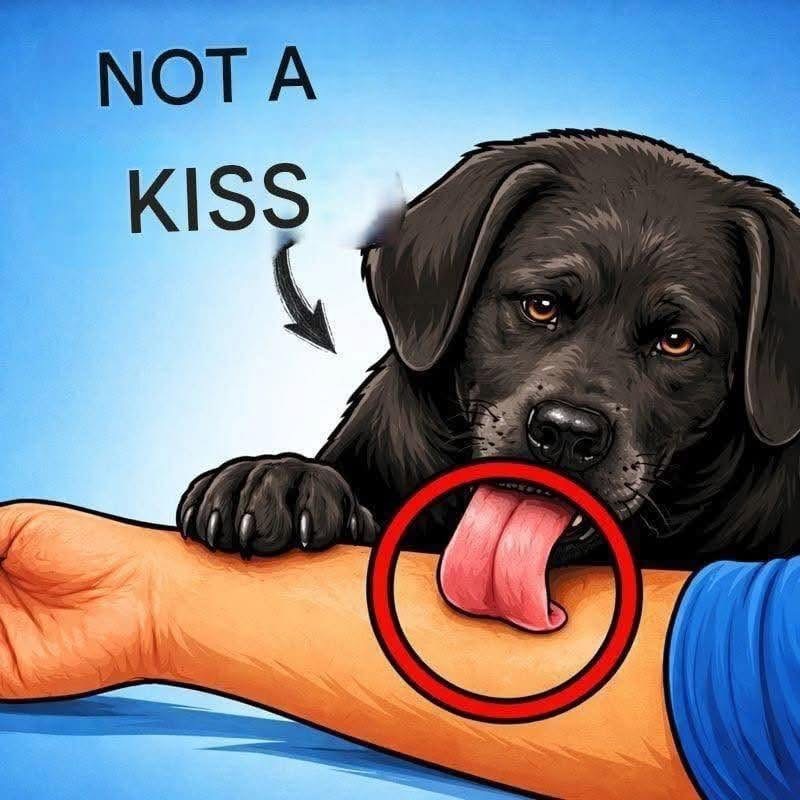
Understanding the “Not a Kiss” Warning: The Reality of Dog Licks
While many pet owners interpret a dog’s enthusiastic licking as a harmless “kiss” or a simple sign of affection, viral educational graphics like the one above highlight important veterinary and health nuances. When a dog licks human skin, it is not always a romanticized gesture of love—it can carry biological, behavioral, and health implications that many owners overlook.
1. The Behavioral Perspective: Why Do Dogs Lick?
Dogs use licking as an instinctual communication tool long before they ever interact with humans:
- Evolutionary Roots: As puppies, dogs are intensely groomed and licked by their mothers, cementing licking as a primary association with safety, comfort, and nurturing.
- Appeasement and Stress Relief: Dogs often lick to self-soothe when feeling anxious, or as a submissive gesture (“pacifying behavior”) if they feel a human is stressed or upset.
- Sensory Exploration & Taste: Dogs experience the world through taste and smell. Human skin has a naturally salty flavor, especially after light perspiration, making a human arm or hand an intriguing sensory target.
2. The Health and Hygiene Reality
Though portrayed as cute, letting a dog persistently lick human skin—especially broken skin, cuts, or near mucous membranes—comes with medical risks:
- Bacterial Transfer: A dog’s mouth naturally harbors a wide array of bacteria, yeasts, and pathogens picked up from their environment.
- Risk of Infection: While healthy skin acts as a strong barrier, letting a dog lick open wounds or scratches can introduce bacteria like Capnocytophaga, Staphylococcus, or E. coli, potentially leading to localized skin infections or worse.
- Vulnerable Populations: Children, the elderly, and anyone with a compromised immune system should exercise extra caution regarding pet saliva exposure.
Summary Checklist for Pet Owners
- Keep it balanced: Enjoying your dog’s company is wonderful, but setting boundaries around face and wound-licking is a smart hygiene practice.
- Watch for compulsions: If a dog’s licking becomes frantic, obsessive, or targeted heavily at specific objects or themselves, it can indicate underlying medical discomfort, skin allergies, or canine anxiety that requires a veterinarian’s evaluation.
Is there a specific aspect of canine behavior or pet health you would like to explore further?