Understanding Soursop Leaves: An Exploration of Traditional Use and Scientific Evidence
Nature’s pantry is vast, offering a multitude of plants that have been used by diverse cultures for centuries to support health and well-being. One such plant, widely known for its interesting fruit and increasingly for its leaves, is soursop. Known botanically as Annona muricata, the soursop tree, also called Graviola or Guanabana, is native to tropical and subtropical regions of the Americas and the Caribbean. While the spiky, tangy-sweet fruit is a popular ingredient in desserts and beverages, the leaves of the tree have been gaining significant attention in the realm of traditional wellness. This article aims to explore the traditional applications of soursop leaves, the scientific research surrounding them, and how to understand the claims often associated with this potent botanical.
Traditional Uses and Cultural Significance
The use of soursop leaves in traditional healing practices is not new. In fact, various parts of the Annona muricata tree have been employed by indigenous communities for generations. The methods of preparation and the specific uses vary slightly from region to region, reflecting a deep, practical knowledge of local flora.
Methods of Preparation
One of the most common traditional methods of utilizing soursop leaves is by creating a decoction or infusion. This usually involves:
- Selection: Choosing mature, healthy leaves from the soursop tree.
- Cleaning: Washing the leaves thoroughly to remove dust and impurities.
- Preparation: In many traditional practices, a specific number of leaves—often 10, sometimes 12—are used, a practice that highlights the ritualistic nature of some traditional preparations.
- Boiling: The leaves are typically boiled in water. A popular guideline within traditional circles suggests boiling the leaves (often 10 soursop leaves) for a defined period, sometimes noted as 7 minutes, which is thought to optimize the extraction of key compounds without degrading them.
- Steeping: After boiling, the mixture is sometimes allowed to steep for an additional period.
- Straining: The leaves are strained out, and the resulting tea-like liquid is consumed.
This warm infusion has a unique, slightly astringent flavor and is consumed for various reasons according to traditional lore.
Traditional Claims and Folklore
In folklore and traditional practices, soursop leaf tea has been used for a wide array of perceived benefits. These claims range from common, everyday ailments to more complex conditions. It’s important to understand that these uses are based on passed-down knowledge and observation within traditional systems, rather than modern clinical trials.
Some of the common historical applications of soursop leaf tea include:
- Digestive Support: Used traditionally to soothe minor stomach discomfort and support general digestive health.
- Skin Health: Topical applications of crushed leaves or decoctions were sometimes used for specific skin conditions in traditional systems.
- Respiratory Comfort: Employed in some cultures to promote respiratory ease.
- Stress Management: In certain practices, it was believed to have calming properties.
- General Vitality: Often consumed as a general wellness tonic.
Complex Claims and Cautions
In recent years, the conversation surrounding soursop leaves has become increasingly centered on complex and serious health claims. Discussions about soursop leaves online and in various communities often associate it with being able to tackle major issues like severe health imbalances, significant metabolic challenges, or major inflammatory concerns.
It is absolutely crucial to approach these specific claims with a heavy dose of scientific skepticism. While traditional knowledge is incredibly valuable, it should not be conflated with evidence from rigorous, peer-reviewed human clinical trials. Scientific evidence on these serious claims in humans is severely limited, and there is absolutely no current justification for viewing soursop leaves as a replacement for conventional medical treatments. Relying solely on botanical remedies for serious conditions can lead to delayed medical care, and managing complex health challenges should always be done under the guidance of a qualified healthcare professional.
Scientific Investigation into Annona muricata
The scientific community has shown considerable interest in the compounds found within the soursop tree, including the leaves. While the road from traditional use to accepted clinical evidence is long, research has identified a diverse array of interesting phytochemicals that merit exploration.
Phytochemical Profile
The potential wellness-promoting effects of soursop leaves are thought to stem from their unique blend of plant compounds. These include:
- Alkaloids: A large group of naturally occurring compounds that are known for having various physiological effects.
- Flavonoids: Polyphenolic compounds that are ubiquitous in the plant kingdom and often studied for their antioxidant potential.
- Phenolic Compounds: Plants’ primary antioxidants, which help to protect them from environmental stressors.
- Acetogenins: This is a particularly unique and much-studied group of compounds found primarily in plants of the Annonaceae family. Annonaceous acetogenins are often cited in scientific literature for their interesting biological activities.
Preliminary In Vitro and Animal Studies
The majority of current scientific research on soursop leaves has been conducted in vitro (using cell cultures in a lab) or in animal models. These studies have shown interesting and promising results that warrant further investigation, but they are preliminary and do not always translate to humans.
Some areas where research has shown promise include:
- Antioxidant Support: Studies have demonstrated that soursop leaf extracts exhibit antioxidant properties in vitro, meaning they have the potential to help protect cells from oxidative stress. This is a common finding for plants rich in polyphenols and flavonoids.
- Immunomodulatory Effects: Some preliminary studies suggest that certain compounds in soursop leaves might interact with parts of the immune system. The exact nature and implications of this interaction in humans are not yet fully understood.
- Inflammatory Support: Research in animal models has suggested that soursop leaf extracts might have properties that support the body’s natural inflammatory processes, possibly through mechanisms that modulate the production of certain molecules.
The Critical Gap: Human Clinical Trials
The most significant hurdle to accepting soursop leaves as a proven therapeutic option for any serious condition is the complete lack of robust, large-scale, double-blind, placebo-controlled human clinical trials. This is the gold standard of scientific evidence, and without it, any claims about soursop leaves being able to “treat” complex human conditions remain entirely speculative and unsubstantiated.
The Challenge of Identifying the “Recipe”
The search for a standard “recipe” or defined dosage for soursop leaves is complex. In traditional systems, guidelines were often highly specific but also varied significantly between cultures. Today, consumers often encounter different advice, making it challenging to know how to proceed safely.
The Influence of Misleading Content
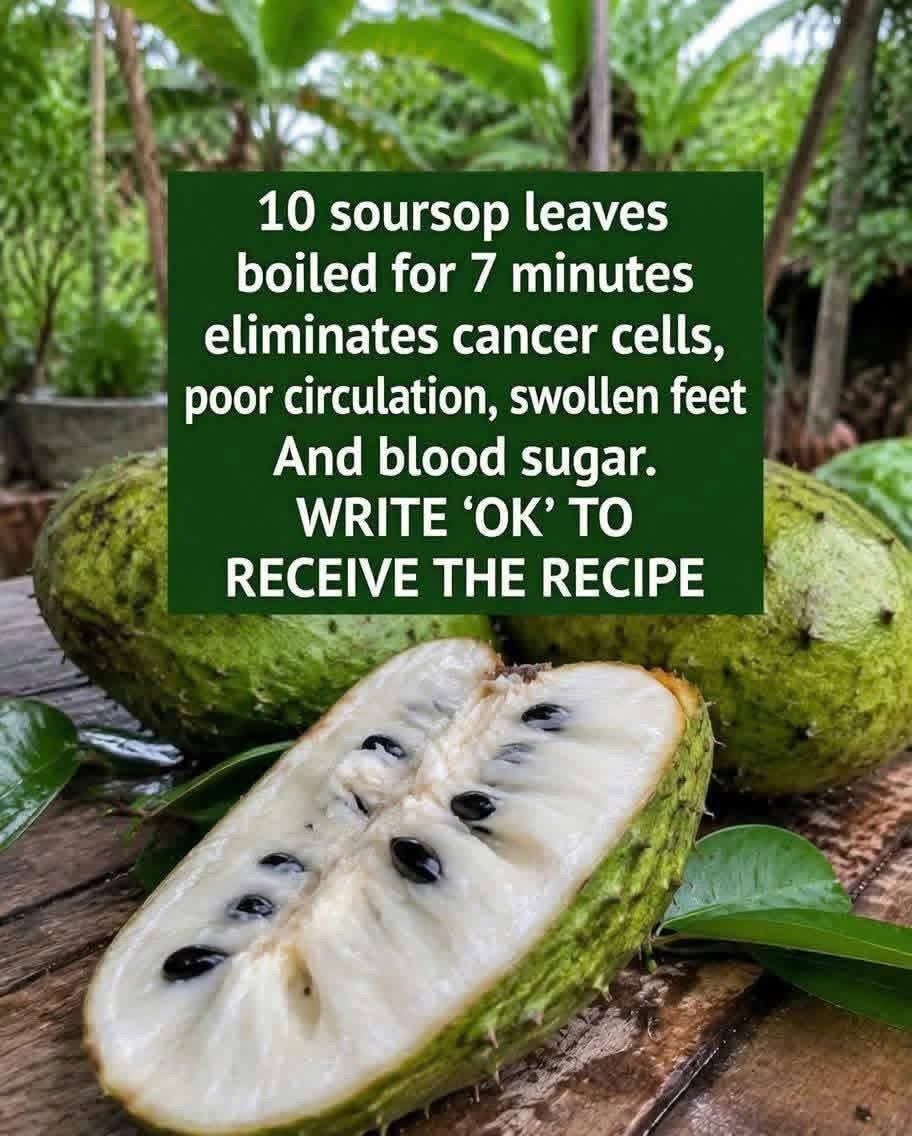
It is not uncommon to see posts in various communities, often accompanied by vibrant images of soursop fruit or leaves like those found in image_19.png, which suggest specific guidelines with questionable assertions. For instance, some content might state that 10 soursop leaves boiled for 7 minutes are essential for a particular effect. These assertions are often presented without clear attribution or reliable scientific back-up. Furthermore, some platforms use “write ‘OK'” calls-to-action to increase visibility and propagate potentially unsubstantiated claims.
Consumers are strongly advised to remain wary of such specific, unsubstantiated guidelines, especially when they are combined with sensationalized claims about managing serious health issues.
The Path to Standardization
Modern botanical sciences aim to overcome the variability inherent in plant materials and traditional preparations through standardization. This involves creating consistent extracts that contain defined levels of specific phytochemicals. For soursop leaves, standardization would likely focus on key compounds like specific acetogenins. However, until human clinical trials establish safe and effective dosages, any recommended “recipe” is, at best, based on traditional practice and, at worst, on potentially misleading assertions.
Considering Soursop Leaves for Wellness
For individuals interested in exploring soursop leaves as part of a general wellness regimen, a mindful and cautious approach is essential. This botanical should be viewed through the lens of traditional use and preliminary science, not as a proven treatment for complex issues.
Integrating Botanicals Safely
- Consult a Professional: This is the single most important step. Before adding any new botanical supplement or preparation to your routine, consult a qualified healthcare provider, such as your doctor, a registered dietitian, or a knowledgeable naturopathic physician. This is particularly crucial if you have existing health conditions, are pregnant or nursing, or are taking any medications.
- Source Quality Matters: If you choose to explore soursop leaves, prioritize high-quality sourcing. Look for reputable botanical suppliers who can provide information on the origin of their leaves and ensure they are free from pesticides and heavy metals.
- Moderation is Key: Traditional practices often use defined quantities. It is generally wise to start with a very small amount and observe how your body reacts. Avoid excessive consumption, as even natural botanicals can have side effects.
- Listen to Your Body: Everyone’s body is different. Pay attention to how you feel after consuming soursop leaf tea. If you experience any discomfort or adverse reactions, discontinue use and consult a healthcare professional.
Safety Considerations and Potential Risks
While soursop leaves are a part of traditional diets in many regions, they are not without potential risks, especially when consumed in excessive amounts or as concentrated extracts. Scientific understanding of the long-term effects of high dosages is still evolving.
Possible Interactions
- Blood Pressure: Some animal studies suggest soursop leaves might influence blood pressure. Individuals already taking medications for blood pressure should consult a doctor before consuming soursop leaf tea.
- Blood Sugar: There is preliminary research suggesting an interaction with blood sugar regulation in animal models. Those with diabetes or hypoglycemia should use soursop leaves with extreme caution and under medical supervision.
- Nerve Health Concerns: It is crucial to be aware of reports in scientific literature that link prolonged, high-dosage consumption of soursop fruit or products containing annonaceous acetogenins to specific types of nerve health concerns. While this connection is not fully understood, it highlights the importance of moderation and further research.
Given these potential risks, managing major challenges, particularly serious, persistent health concerns or conditions related to areas like inflammatory support or general vitality, should always be managed under professional guidance.
The Importance of Professional Medical Guidance
In the landscape of health and wellness, botanicals can be exciting and promising allies. However, when faced with major health challenges, relying on unsubstantiated claims from online communities or passes-down folklore is incredibly risky. Botanicals like soursop leaves are generally intended for supportive wellness and general vitality, not as first-line defenses against major medical conditions.
Major challenges related to areas such as chronic health imbalances, major inflammatory concerns, severe tissue issues, metabolic disorders, and persistent systemic imbalances are complex medical issues. They require the expertise of qualified medical professionals who can provide accurate diagnoses and evidence-based treatment plans tailored to each individual’s needs.
Managing such significant issues should always be done under the direct supervision of a healthcare provider. Discussing any potential botanical additions with a qualified professional is the only way to ensure they are integrated safely and do not interfere with conventional medical treatments.
Conclusion
Soursop leaves have a fascinating history within traditional wellness systems, and preliminary scientific research has identified interesting plant compounds that warrant further exploration. While the visual of the leaves and fruit in image_19.png is evocative of this natural source, the claims of soursop being able to tackle major, specific health conditions are currently unsubstantiated by rigorous human clinical evidence. Individuals interested in incorporating soursop leaves into their lives should approach them with mindful caution, viewing them through the lens of supportive wellness. Above all, managing major health challenges should always be guided by the expertise of qualified medical professionals to ensure safety, efficacy, and timely care.