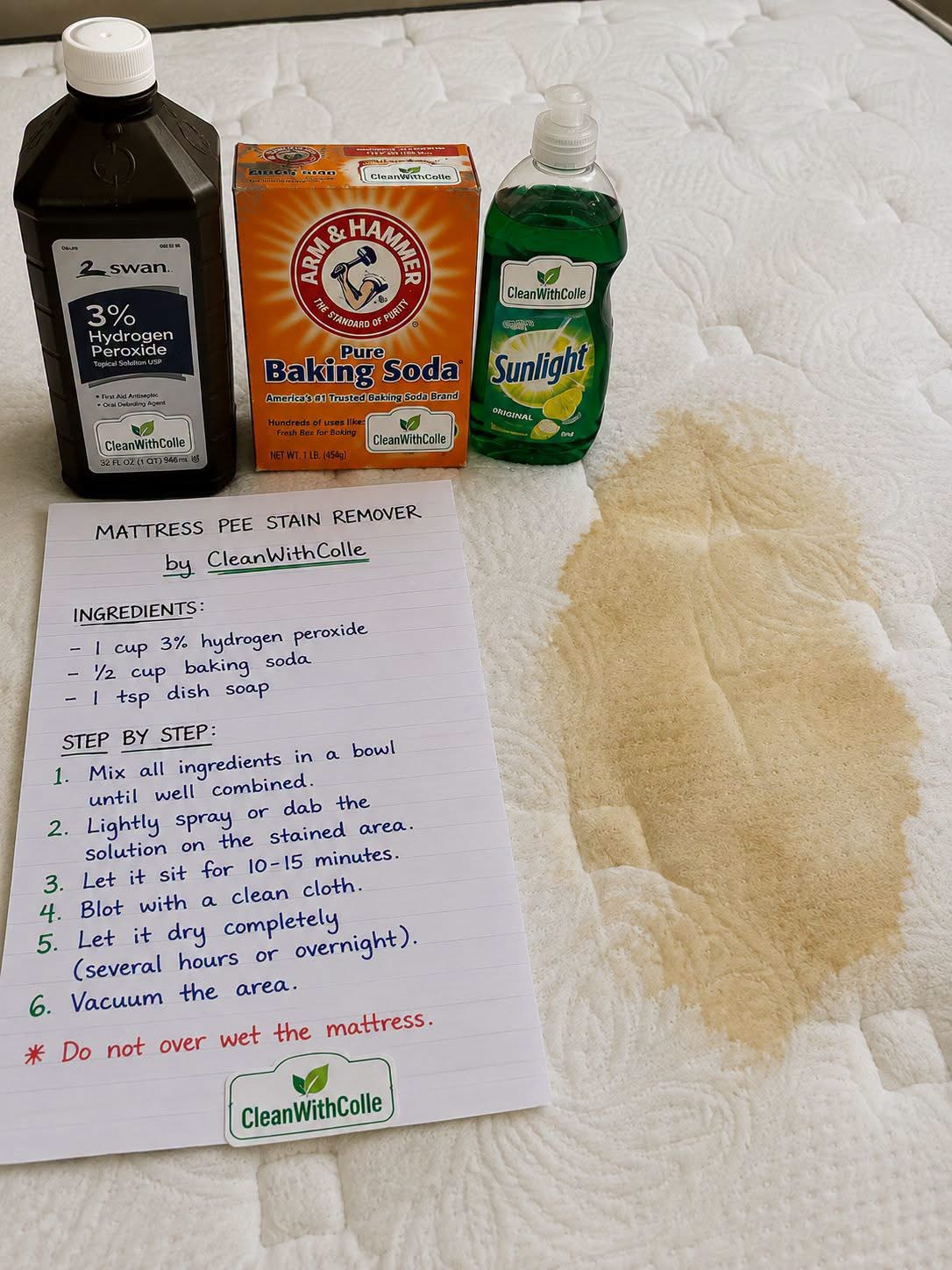
How to Clean Mattress Stains at Home: A Simple DIY Cleaning Method
Have you noticed yellow stains, dirt, or dark marks on your mattress? Over time, mattresses can collect sweat, dust, body oils, and accidental spills, making them look old and dirty. Fortunately, you can try a simple homemade cleaning solution using everyday household ingredients to freshen up your mattress and tackle surface stains.
This easy mattress-cleaning method uses diluted dish soap, water, and a clean towel. It is a practical option for routine cleaning, especially when you want to refresh your bed without purchasing expensive cleaning products.
Important: The method shown in the video uses an iron wrapped in a towel. However, applying heat to a mattress can damage its fabric, create moisture-related problems, or pose a fire risk. The safer approach is to clean the stain with a small amount of solution and allow the mattress to dry completely.
🧼 Homemade Mattress Stain Cleaner
This simple cleaning solution is designed to help remove surface dirt and freshen up areas of your mattress. It works best on light, recent stains, although results depend on the mattress material and the type of stain.
Ingredients
- 2 cups of lukewarm water
- 1 teaspoon of mild liquid dish soap
- 1 clean microfiber cloth
- 1 soft cleaning brush (optional)
- 1 dry towel
- A spray bottle (optional)
Optional: For stubborn stains, use a mattress-safe upholstery cleaner according to the manufacturer’s instructions. Avoid adding several cleaning chemicals together.
🥣 Step-by-Step Instructions
Step 1: Prepare the Cleaning Solution
Pour two cups of lukewarm water into a bowl. Add one teaspoon of mild liquid dish soap and stir gently until the soap is mixed into the water.
Avoid using too much soap because excess residue can be difficult to remove from mattress fabric.
Step 2: Remove Dust and Loose Dirt
Remove all bedding, including sheets, blankets, and mattress protectors. Vacuum the mattress surface using a suitable upholstery attachment.
Pay attention to seams and quilted areas where dust and debris may collect.
Step 3: Test the Fabric First
Before cleaning the entire mattress, test a small amount of the diluted solution on an inconspicuous area.
Check for discoloration, fabric damage, or changes in texture. Follow the care label and manufacturer instructions whenever available.
Step 4: Apply the Solution to the Stain
Dip a microfiber cloth into the cleaning mixture and wring it out thoroughly. The cloth should be damp, not soaking wet.
Gently dab the stained area, working from the outside toward the center. Avoid aggressively rubbing the fabric, as this can spread the stain or damage the surface.
Step 5: Blot Away Excess Moisture
Use a clean, dry towel to press gently against the treated area. Continue blotting to remove moisture and loosened dirt.
Do not pour the solution directly onto the mattress or soak the inner padding.
Step 6: Allow the Mattress to Dry Completely
Leave the mattress uncovered in a well-ventilated room. Use a fan to improve airflow if needed.
Make sure the treated area is completely dry before putting the bedding back on the mattress.
🛏️ Why Does This Cleaning Method Work?
The cleaning solution combines water with a small amount of mild dish soap. Each ingredient has a simple purpose.
Lukewarm Water
Water helps loosen water-soluble dirt and allows the cleaning solution to spread across the surface. Lukewarm water is generally sufficient for this type of gentle cleaning.
Avoid very hot water, particularly when dealing with protein-based stains, because heat can make some stains more difficult to remove.
Mild Dish Soap
Dish soap is designed to help break down grease and oils. In a properly diluted solution, it can help lift some surface dirt and body-oil residue from washable fabrics.
However, dish soap is not suitable for every mattress material. Use a small amount and remove soap residue with a clean, slightly damp cloth.
Microfiber Cloth
A microfiber cloth helps collect loosened dirt while reducing the need for vigorous scrubbing. It is particularly useful for spot cleaning because it allows you to control how much moisture reaches the mattress.
⚠️ Can You Use an Iron Wrapped in a Towel on a Mattress?
The viral cleaning video shows an iron covered with a purple towel being moved across the mattress. Although this may appear to be a way to lift dirt or dry the fabric, I do not recommend using a heated iron on your mattress.
Here are some reasons:
- Excessive heat may damage the mattress cover or foam.
- Moisture trapped inside the mattress can encourage mold growth.
- A hot iron and flammable bedding materials can create a fire hazard.
- Heat may set certain stains rather than remove them.
- The mattress manufacturer’s care instructions may prohibit heat exposure.
Instead, use a clean towel to blot moisture and allow the mattress to air-dry naturally. If you need deeper cleaning, choose a method approved for your mattress type.
🧽 How to Remove Different Types of Mattress Stains
Not all stains respond to the same cleaning method. Identifying the stain can help you choose a safer and more effective approach.
Yellow Sweat Stains
Yellow discoloration can develop over time from perspiration, body oils, and aging materials. A mild cleaning solution may help with surface dirt, but older discoloration can be difficult to remove completely.
For persistent stains, check the mattress care label and consider a professional upholstery or mattress-cleaning service.
Coffee or Drink Spills
If a drink spills on your mattress, act quickly. Blot the liquid with a clean towel instead of rubbing it into the fabric.
Use a small amount of a suitable cleaner, then blot again and allow the area to dry thoroughly.
Dust and Everyday Dirt
Regular vacuuming and the use of a washable mattress protector can help reduce the buildup of dust and debris.
If your mattress has removable, washable covers, follow the washing instructions provided by the manufacturer.
Unidentified or Biological Stains
For blood, urine, vomit, or other biological stains, use a cleaning product specifically intended for the stain and compatible with your mattress. Wear suitable gloves when necessary, and avoid mixing cleaning chemicals.
A homemade dish-soap solution may not be enough to sanitize or fully remove these stains.
🌿 Tips to Keep Your Mattress Cleaner for Longer
Cleaning a mattress is easier when you combine occasional spot treatment with regular maintenance.
1. Use a Mattress Protector
A washable, properly fitted mattress protector helps protect the mattress from sweat, spills, and everyday dirt. Wash it according to its care instructions.
2. Vacuum Regularly
Vacuum the surface and seams periodically to reduce dust and debris buildup.
3. Avoid Eating and Drinking in Bed
Food and drinks can lead to spills, stains, and unwanted odors. Keeping them away from the mattress helps reduce cleaning needs.
4. Keep the Room Well Ventilated
Good airflow helps manage moisture in the bedroom. If your mattress becomes damp, dry it completely before using it again.
5. Treat Spills Quickly
Fresh spills are often easier to manage than stains that have been left untreated for a long time. Blot promptly and use a suitable cleaning method.
6. Follow Manufacturer Instructions
Different mattresses contain different materials, including memory foam, latex, springs, and specialized fabrics. Always check the care label before using water, heat, or cleaning products.
Frequently Asked Questions
Can I use dish soap to clean my mattress?
Yes, a small amount of mild dish soap diluted in water may help clean some surface stains. Test it first and avoid soaking the mattress. Always follow the manufacturer’s care instructions.
How often should I clean my mattress?
Vacuuming and general maintenance can be done regularly, while spot cleaning is needed when spills or stains occur. The appropriate schedule depends on the mattress, its use, and the manufacturer’s recommendations.
Can I use baking soda on my mattress?
Baking soda is commonly used as a dry deodorizing powder, but it does not remove every type of stain or reliably sanitize a mattress. If you use it, follow the mattress manufacturer’s guidance and remove the powder thoroughly.
Why shouldn’t I soak my mattress?
Excess moisture can penetrate the interior padding, making it difficult to dry fully. Trapped moisture can contribute to unpleasant odors, mold, and material damage.
Is the iron method safe for all mattresses?
No. A hot iron should not be assumed to be safe for mattresses. Heat can damage some materials and increase fire risk. Use a suitable cleaning method and air-dry the mattress instead.
Final Thoughts
A clean mattress can make your bedroom feel fresher and more comfortable. This simple mixture of diluted dish soap and lukewarm water may help with light surface dirt and certain stains, but it is not a guaranteed solution for every type of mattress discoloration.
For the best results, use a small amount of cleaning solution, avoid excessive moisture, test the fabric first, and allow the mattress to dry completely. Most importantly, skip the hot-iron technique shown in the viral video and choose a safer cleaning approach.
Have you ever tried cleaning your mattress at home? Share your favorite cleaning tips in the comments!