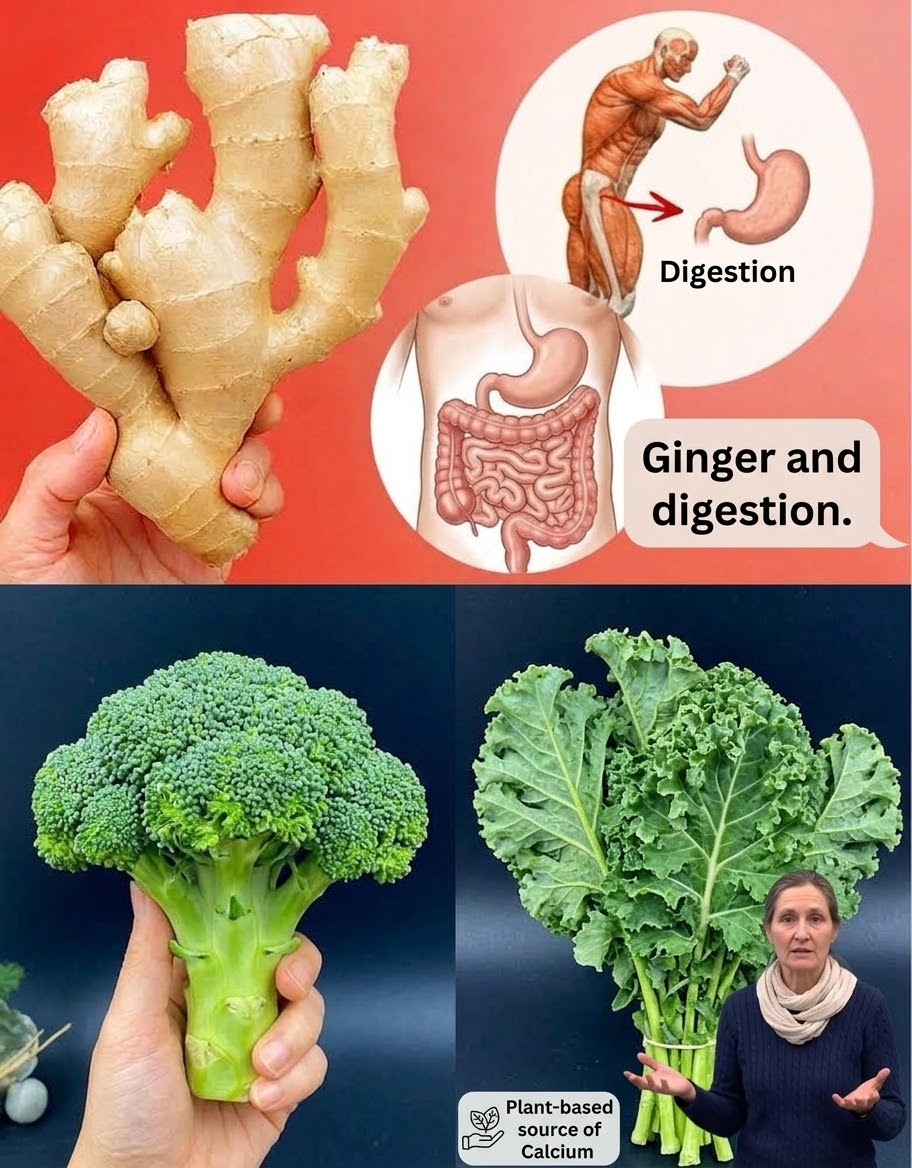
Nature Blueprint: How Ginger, Broccoli, and Kale Supercharge Your Gut and Bone Health
When modern wellness advice feels overwhelming, returning to foundational whole foods often yields the most sustainable health breakthroughs. The visual link between certain plants and human anatomy is an ancient concept known as the Doctrine of Signatures, but modern nutritional biochemistry now confirms the tangible biochemical mechanisms behind why ginger, broccoli, and kale are essential staples for daily vitality.
1. Ginger: The Master Regulator of Gastric Motility
Ginger (Zingiber officinale) has long been celebrated for its distinctive aromatic profile and culinary versatility. Beyond flavor, its bioactive compounds—primarily gingerols and shogaols—interact directly with gastrointestinal physiology.
- Accelerated Gastric Emptying: Sluggish digestion frequently leads to post-meal heaviness, bloating, and acid reflux. Ginger stimulates antral contractions in the stomach, promoting smoother gastric emptying and preventing food from fermenting excessively in the upper digestive tract.
- Anti-Inflammatory Action in the Gut: Chronic low-grade inflammation within the intestinal lining can impair nutrient absorption and disrupt gut barrier integrity. Gingerol inhibits pro-inflammatory cytokines and enzymes (such as COX-2), protecting mucosal surfaces.
- Alleviation of Nausea and Gas: By interacting with serotonin (5-HT3) receptors in the digestive system, ginger acts as a natural prokinetic agent, relieving spasms and helping the intestinal smooth muscle relax.
2. Broccoli and Kale: Powerhouse Plant-Based Calcium and Cellular Defense
While dairy is traditionally viewed as the primary source of calcium, dark cruciferous vegetables like broccoli and kale offer highly bioavailable, alkalizing alternatives packed with synergistic micronutrients.
High-Bioavailability Calcium
Unlike spinach, which contains high levels of oxalates that bind to minerals and hinder absorption, kale and broccoli have remarkably low oxalate content. This makes their calcium fraction significantly more absorbable by the intestinal wall, directly aiding:
- Bone Mineral Density: Providing structural support to skeletal matrices alongside magnesium and phosphorus.
- Muscular Contraction and Nerve Transmission: Maintaining cellular electrolyte balance for optimal heart and skeletal muscle function.
Cruciferous Detoxification via Sulforaphane
Broccoli, particularly when raw or lightly steamed, delivers glucoraphanin, which converts into sulforaphane when crushed or chewed. Sulforaphane activates the Nrf2 pathway, the body’s master antioxidant defense system:
- Up-regulates Phase II detoxification enzymes in the liver.
- Neutralizes oxidative stress in vascular and epithelial tissues.
- Protects gut microbiota diversity by selectively reducing pathogenic bacterial overgrowth.
Nutritional Breakdown at a Glance
| Whole Food | Key Active Nutrients | Primary Physiological Target | Best Way to Consume |
| Ginger Root | Gingerols, Shogaols, Volatile Oils | Stomach motility, gut lining, nausea relief | Steeped fresh in hot water, grated raw into dressings |
| Broccoli | Sulforaphane, Calcium, Vitamin C | Cellular defense, phase II detox, collagen synthesis | Lightly steamed (3–4 minutes), eaten with healthy fats |
| Curly Kale | Low-oxalate Calcium, Vitamin K1, Lutein | Bone density, arterial health, blood clotting | Massaged raw with olive oil, blended in smoothies |
Practical Ways to Integrate Them Daily
- Morning Ginger Tonic: Grate half an inch of fresh ginger root into warm water with a squeeze of lemon. Drink it 15 minutes before breakfast to prepare the stomach for efficient digestion.
- Massaged Kale Bowls: Break down raw kale fibers by tossing chopped leaves with extra virgin olive oil and a pinch of sea salt. This softens the texture and pairs fat-soluble Vitamin K with healthy lipids for maximal uptake.
- Al Dente Steamed Broccoli: Avoid boiling, which leaches vital water-soluble vitamins into the cooking water. Steam florets until bright green and tender-crisp to keep myrosinase enzymes active and preserve maximum sulforaphane yield.