The Miracle Leaf? Fact-Checking the Claims Around Kalanchoe pinnata
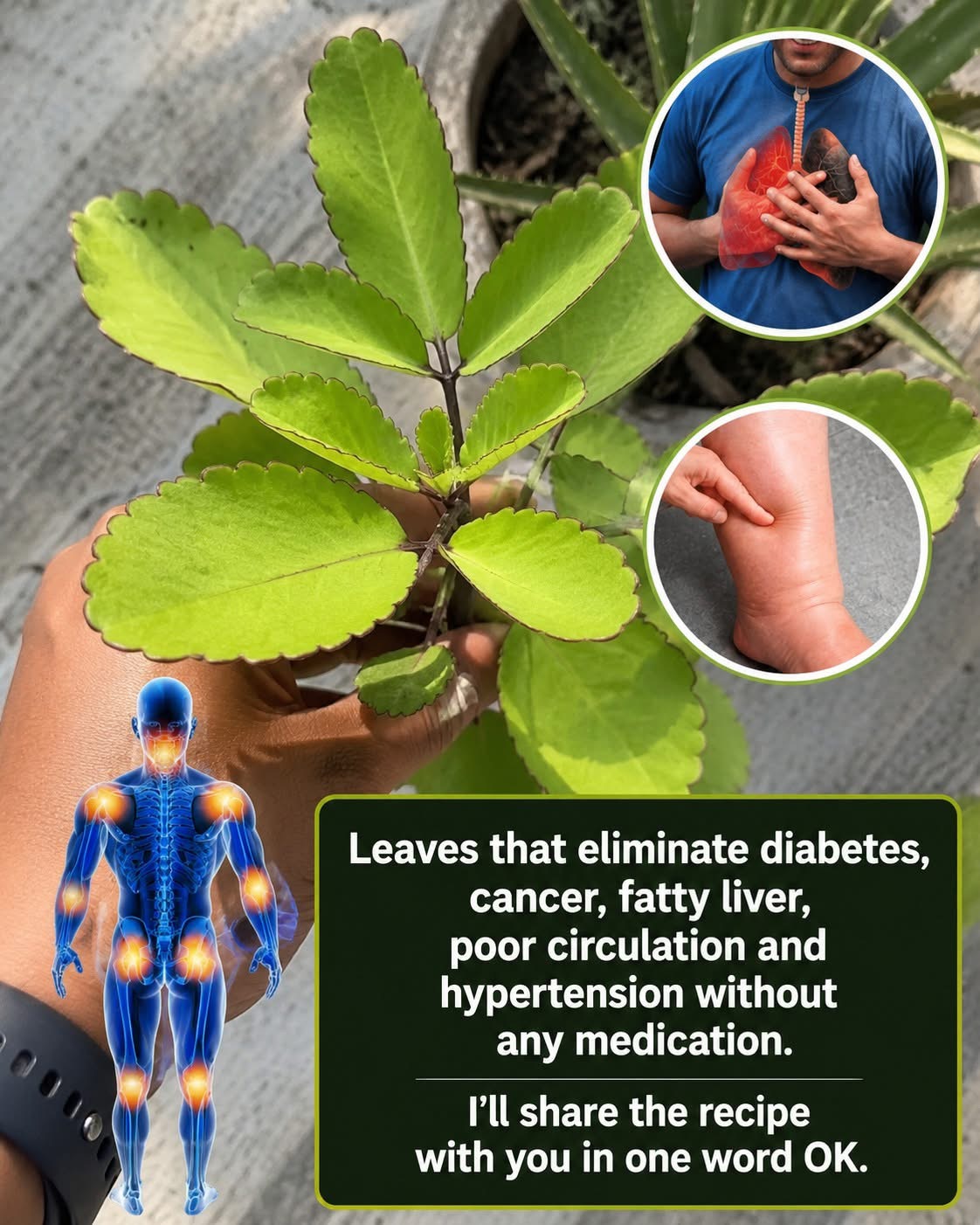
In the digital era, eye-catching health graphics frequently circulate on social media making bold promises about natural remedies. A prominent example is found in image_2.png, which showcases a vibrant green plant alongside text claiming it can “eliminate diabetes, cancer, fatty liver, poor circulation, and hypertension without any medication.”
While the allure of a simple, single-word natural remedy is understandable, responsible wellness requires looking at what science actually says. The botanical featured in image_2.png is Kalanchoe pinnata (commonly known as Bryophyllum pinnatum, “Miracle Leaf,” or “Life Plant”).
While it boasts a rich history in global traditional medicine, separating proven biological benefits from exaggerated online hype is crucial for your safety and health.
What is Kalanchoe pinnata?
Kalanchoe pinnata is a succulent plant native to Madagascar that has naturalized throughout tropical and subtropical regions across Asia, Africa, and the Americas. It is most famous for its unique method of vegetative propagation: small plantlets develop naturally along the scalloped margins of its thick leaves, allowing it to multiply rapidly—a trait that earned it nicknames like the “Resurrection Plant”.
Historically, various cultures have crushed the leaves into a topical poultice to soothe skin wounds, minor burns, and insect bites.
Separating Viral Claims from Scientific Evidence
Modern pharmacology frequently studies traditional plants to find active chemical compounds. Researchers have successfully isolated several bioactive molecules from Kalanchoe pinnata, including flavonoids (like quercetin and kaempferol), phenolic acids, and bufadienolides.
Here is how current scientific literature matches up against the sweeping claims seen in viral graphics:
1. Diabetes and Blood Sugar Regulation
- The Claim: Eliminates diabetes.
- The Reality: Preclinical animal models have shown that aqueous extracts of Kalanchoe pinnata can help reduce blood glucose levels and improve insulin sensitivity. This is largely credited to flavonoids like quercetin, which mimic some antioxidant and protective pathways in pancreatic cells. However, it does not “eliminate” diabetes, and clinical human trials are still severely limited. It should never replace prescribed insulin or oral hypoglycemic medications.
2. Blood Pressure and Circulation
- The Claim: Eradicates hypertension and poor circulation.
- The Reality: The plant contains bufadienolides, which are cardiac glycosides. In laboratory settings, these compounds interact with cellular pathways to influence smooth muscle tissue and inflammation, which can have a mild anti-hypertensive effect. However, because cardiac glycosides affect heart rhythms, consuming unstandardized amounts can be unpredictable and potentially hazardous.
3. Anti-Tumor and Cancer Research
- The Claim: Cures cancer without medication.
- The Reality: In vitro (test tube) studies have shown that certain isolated compounds from Kalanchoe pinnata exhibit cytotoxic activity, meaning they can inhibit or kill specific isolated cancer cells in a petri dish. While this is a promising avenue for future drug discovery, test-tube success is a long way from a human cure. Assertions that a raw leaf can replace complex oncological care are dangerous and entirely unsupported by clinical science.
Nutritional Profile at a Glance
The therapeutic interest in Kalanchoe pinnata stems from its rich internal chemistry, which contains many of the same beneficial compounds found in everyday fruits and vegetables:
| Chemical Group | Active Component Examples | Documented Properties in Research |
|---|---|---|
| Flavonoids | Quercetin, Kaempferol | Potent antioxidants; counteracts cellular oxidative stress. |
| Organic Acids | Malic Acid, Citric Acid | Supports basic cellular metabolic functions. |
| Triterpenoids | Friedelin, \alpha-amyrin | Demonstrates mild anti-inflammatory and tissue-soothing traits. |
| Minerals | Magnesium, Calcium, Potassium | Essential micronutrients supporting bone and vascular health. |
The Danger of Self-Medication and Instant “Cures”
As outlined in educational health resources like watermarked_img_7692663224519417418.png, relying solely on internet advice for chronic illnesses can cause critical delays in receiving life-saving professional treatment. Chronic conditions like fatty liver disease, high blood pressure, and advanced joint inflammation require comprehensive care, including structured dietary adjustments, regular monitoring, and verified medical therapies.
⚠️ Safety Precautions with Kalanchoe pinnata
- Cardiac Interactions: Because the plant contains cardiac glycosides, it can interact dangerously with prescription heart medications like digitalis or digoxin.
- Dosage Issues: Raw, wild plants vary wildly in potency depending on soil quality, age, and weather conditions, making safe home-dosing nearly impossible.
- Toxicity: Prolonged or heavy internal consumption has shown signs of mild toxicity in animal studies.
Exploring traditional botany is a fascinating aspect of holistic wellness, but it must be approached with a discerning eye. Always consult a certified medical practitioner or endocrinologist before introducing any potent herbal extracts or raw botanicals into your health routine.