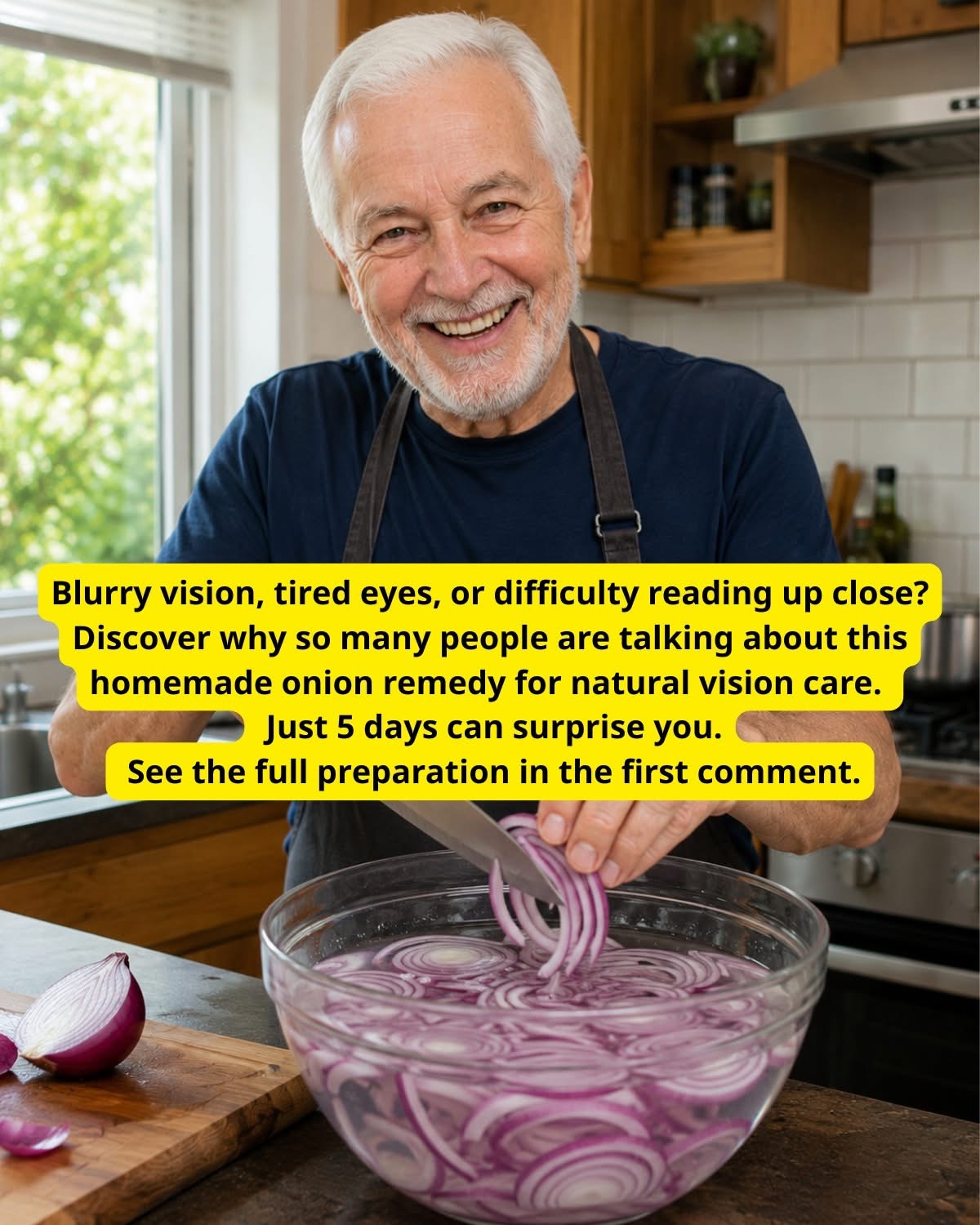
However, if we take that massive bowl of beautifully sliced red onions soaking in water and turn it into a legitimate, multi-day culinary project, we can make something truly incredible: Slow-Fermented Sweet & Spicy Pickled Red Onions.
Unlike quick-pickled recipes that take 10 minutes, this is a full, traditional fermentation recipe that builds incredibly deep, complex flavors over several days.
Traditional Fermented Pickled Red Onions
Fermentation uses the natural sugars in the onions and wild lactobacillus bacteria to create a tangy, complex, probiotic-rich condiment. Soaking the onions first (just like the man in image_2.png is doing) removes the harsh, sulfurous “bite” and keeps them incredibly crisp.
Ingredients & Equipment
- The Veggies: 3 large red onions (very thinly sliced into uniform rings)
- The Brine Base: 2 cups filtered water (chlorine-free, as chlorine kills the good bacteria)
- The Salt: 1.5 tbsp fine sea salt or kosher salt (avoid iodized table salt)
- The Aromatics & Spice:
- 3 cloves of garlic (peeled and smashed)
- 1 tbsp whole black peppercorns
- 1 tsp mustard seeds
- 1 tsp coriander seeds
- 2 dried bay leaves
- 1 small dried chili pod (optional, for a subtle kick)
- Equipment: A clean 1-quart glass Mason jar, a fermentation weight (or a small zip-top bag filled with water), and a breathable lid or cloth.
Step-by-Step Long Preparation
Step 1: The Crisp-Soak (The Image Step)
- Slice your red onions as thinly and uniformly as possible.
- Place them into a large bowl filled with ice-cold water. Let them submerge and soak for 20 to 30 minutes. This leaches out the aggressive sulfur compounds that make onions harsh, leaving them sweet, mellow, and exceptionally crunchy.
Step 2: Toast the Aromatics
- Heat a small, dry skillet over medium-low heat.
- Add the peppercorns, mustard seeds, and coriander seeds. Toast them gently for about 2 to 3 minutes until they become highly fragrant. Toasting wakes up the essential oils in the spices. Remove from heat immediately so they don’t burn.
Step 3: Prepare the Fermentation Brine
- In a measuring jug, combine the 2 cups of filtered water and the sea salt.
- Whisk vigorously until the salt is entirely dissolved. This creates a roughly 3% salinity brine, which is the perfect environment to encourage good lactic acid bacteria while keeping harmful bacteria at bay.
Step 4: Pack the Jar
- Drain the onions thoroughly from their cold water bath.
- At the bottom of your clean glass jar, drop in the toasted spices, smashed garlic cloves, bay leaves, and the optional dried chili.
- Pack the sliced red onions into the jar tightly. Press them down firmly as you layer them to fit as many as possible, leaving about 1 inch of headspace at the top of the jar.
Step 5: Submerge and Weight
- Pour the saltwater brine over the onions until they are completely submerged.
- Crucial Rule: Everything must stay below the brine. Place a fermentation weight (or your small water-filled zip-top bag) on top of the onions to keep them weighed down. Any onion floating above the liquid line can mold.
- Cover the jar loosely with a lid (do not screw it on tightly, as gasses need to escape) or a clean cloth secured with a rubber band.
Step 6: The 5-Day Transformation
- Place the jar in a cool, dark place out of direct sunlight (like a kitchen pantry or a dim counter corner).
- Days 1–2: You will begin to notice tiny bubbles forming and traveling up the sides of the jar. The brilliant purple color of the onion skins will begin to bleed into the liquid, turning the entire jar a stunning, vibrant pink.
- Days 3–5: The brine will turn slightly cloudy—this is a perfect sign that the beneficial bacteria are doing their job. Taste an onion on Day 3. It will taste pleasantly sour, tangy, and complex. Let it ferment for up to 5 days until it reaches your preferred level of tanginess.
Step 7: Storage
Once you love the flavor, seal the jar with a tight lid and move it to the refrigerator. The cold temperature stops the fermentation process. These will keep perfectly in the fridge for up to 2 to 3 months, getting better by the week!
They are incredible on tacos, burgers, salads, or bowls. What kind of dish are you planning to pair these onions with?