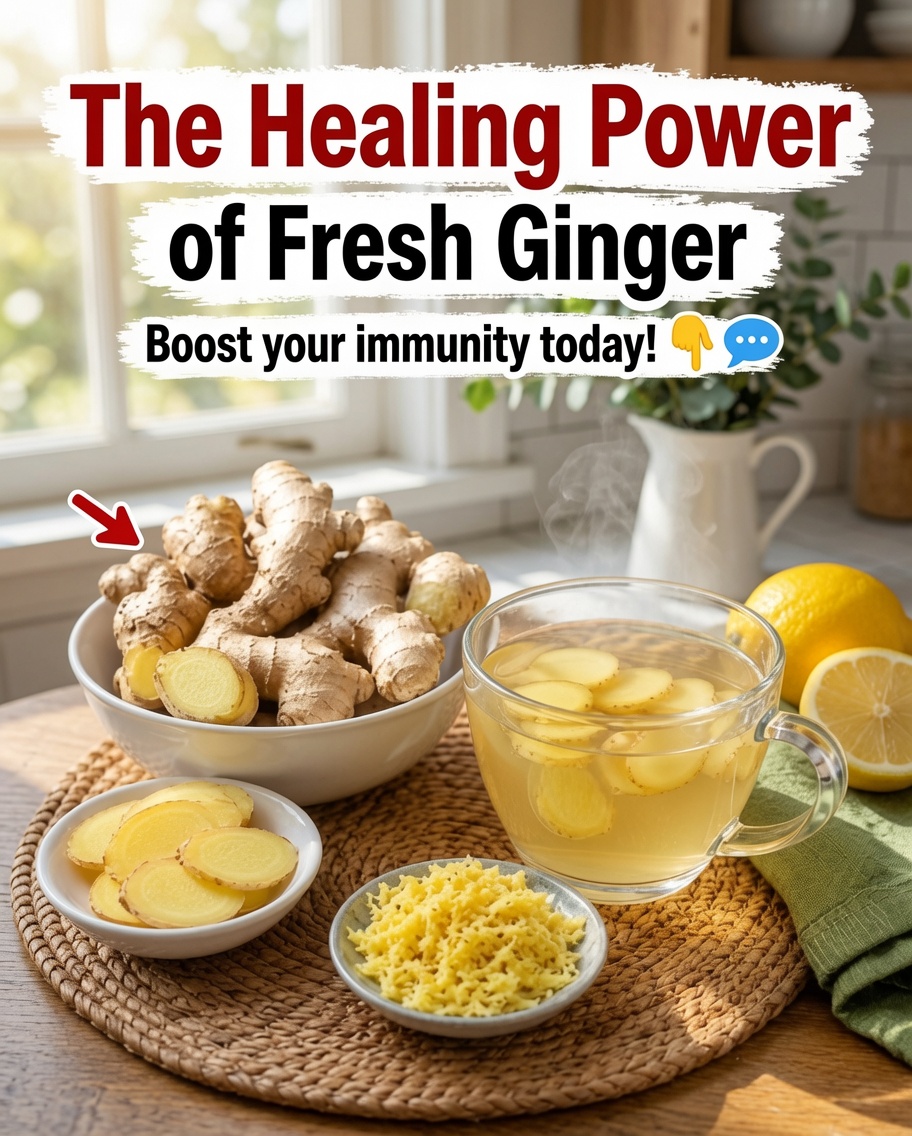
The Healing Power of Fresh Ginger: A Scientific Guide to Boosting Immunity Naturally
🔬 The Molecular Blueprint: What Makes Ginger Effective?
Ginger is not merely a flavorful root; it is a dense powerhouse of volatile oils and phenolic compounds. When you slice or grate the fresh rhizome, you release the primary chemical drivers responsible for its physiological effects:
- Gingerols: This is the primary active component found in fresh ginger. It is chemically structurally similar to capsaicin (the compound found in chili peppers) and is responsible for ginger’s signature spicy taste and documented anti-inflammatory actions.
- Shogaols: When ginger is dried, stored, or gently heated—such as when steeping the ginger tea shown in image.png—gingerols undergo a chemical dehydration process and transform into shogaols. Shogaols are even more potent antioxidants than gingerols, making warm infusions exceptionally effective.
- Zingiberene: An essential oil that gives the root its distinct woody aroma and works synergistically to soothe tissue irritation.
🛡️ How Ginger Directly Supports the Immune System
When web publishers discuss immunity, avoiding vague buzzwords is crucial for user trust and search engine optimization. Here is the exact clinical breakdown of how ginger interacts with the human immune response:
1. Modulating Inflammatory Pathways
A well-regulated immune system requires a delicate balance of inflammation. While acute inflammation is necessary to fight off foreign pathogens, chronic low-grade inflammation exhausts immune cells, leaving the body vulnerable to seasonal bugs.
Gingerols work at a molecular level to inhibit the induction of pro-inflammatory cytokines (cellular signaling molecules like IL-1, TNF-alpha, and IL-6). By naturally dampening these overactive inflammatory signals, ginger helps prevent systemic stress, allowing your immune cells to remain focused on targeted defenses.
2. High Concentrations of Free-Radical Scavengers
Every day, environmental stressors, poor diet, and natural metabolic processes create unstable molecules called free radicals inside our tissue. Left unchecked, these molecules cause oxidative stress, which damages cellular structures and weakens the immune barrier.
The active shogaols and gingerols in a fresh cup of ginger tea act as highly efficient scavengers. They neutralize free radicals on contact, donating an electron to stabilize the molecules and protecting delicate white blood cells from premature damage.
3. Natural Antimicrobial and Antiviral Activity
In laboratory in vitro settings, fresh ginger extracts demonstrate measurable defense mechanisms against common respiratory pathogens. Research indicates that fresh ginger contains active compounds that can help inhibit the attachment of specific respiratory viruses to human cellular walls, acting as a gentle, natural baseline barrier.
🫖 Maximizing Potency: How to Prepare Fresh Ginger Tea
To get the full therapeutic benefits of the setup shown in image.png, preparation technique matters. Boiling ginger aggressively can destroy delicate volatile oils, while under-steeping leaves the active gingerols locked inside the root fibers.
[Grate/Slice Fresh Root] ──> [Simmer Gently 10 Mins] ──> [Cool Slightly & Strain] ──> [Add Fresh Lemon]- Expose the Surface Area: Rather than just tossing a thick chunk of ginger into water, use a microplane to create a fine grate, or slice the root into thin, translucent rounds. This breaks open the dense cell walls, allowing the water to extract the internal oils instantly.
- Gentle Heat is Key: Bring 2 cups of filtered water to a boil, add 1 to 2 tablespoons of your prepared fresh ginger, then immediately drop the heat down to a low simmer. Cover the pot with a lid to trap the rising steam—which carries the volatile essential oils—and let it steep for 10 to 12 minutes.
- The Vitamin C Synergy: Once strained into your favorite mug, let the liquid cool slightly before squeezing in fresh lemon juice (as seen in the background of the image). Vitamin C is highly heat-sensitive; adding it to warm, rather than boiling, tea preserves its antioxidant integrity, working hand-in-hand with the ginger to support your systemic health.
📊 Quick-Reference Guide: Fresh vs. Powdered Ginger
| Nutritional Attribute | Fresh Ginger Root (Slices/Grated) | Dried Powdered Ginger |
|---|---|---|
| Primary Bioactive | Dominated by highly active Gingerols. | Dominated by concentrated Shogaols. |
| Best Used For | Direct respiratory soothing, easing acute nausea, and fresh antioxidant defense. | Systemic inflammation management and long-term storage convenience. |
| Flavor Profile | Bright, sharp, pungent, and refreshing. | Earthy, deep, intensely warm, and sweet. |
⚠️ Safe Consumption Boundaries
While fresh ginger is an incredible, natural asset for overall vitality, moderation is foundational to good health. Clinical guidelines recommend that healthy adults limit their daily intake to 4 grams of raw ginger root per day.
Furthermore, because ginger has natural blood-thinning properties and can actively lower blood glucose, individuals who are currently prescribed blood thinners (like Warfarin), antidiabetic medications, or those who have a history of painful gallstones should always check in with their healthcare provider before introducing concentrated daily wellness shots into their routine.